RR Bootcamp
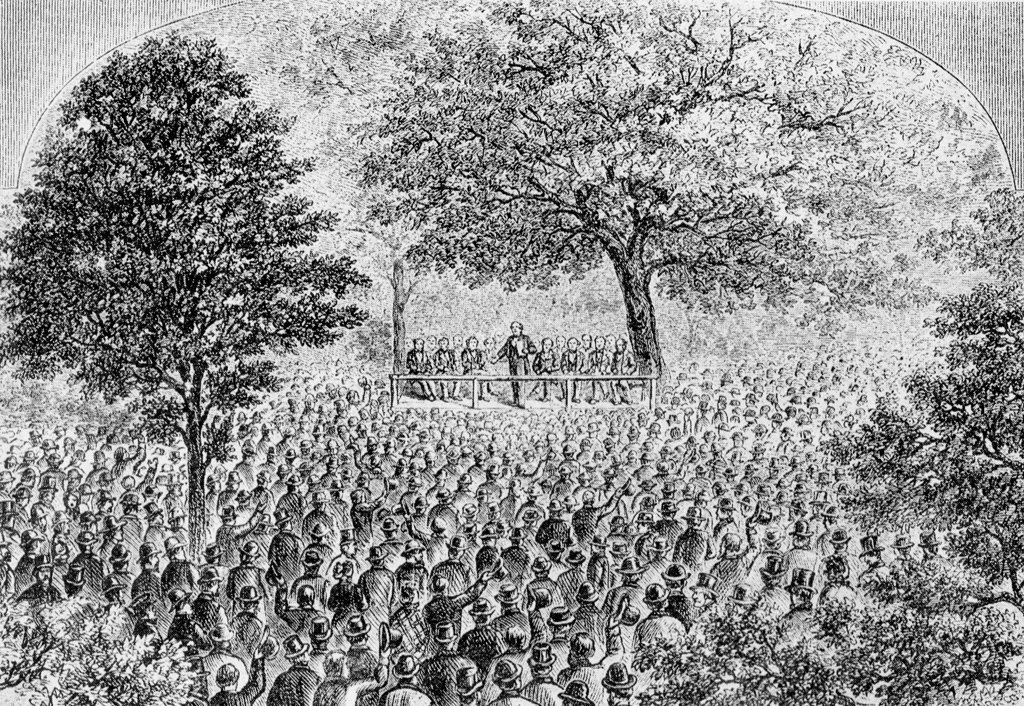
Under the Oaks Drawing

The Republican Party

The Republican Party of the United States was founded in Jackson, Michigan in 1854.

The Republican National Committee, known as the RNC, provides the national leadership for the Republican Party across the states. It is the responsibility of the RNC to develop and promote the Republican Party Platform through organizing and operating fundraising and election strategy at the annual national convention.

The RNC has 168 members which consists of the National Chair and a National Committeeman and National Committeewoman from each state of the fifty states and six territories. Each RNC committee member receives one vote at RNC meetings and votes to elect the RNC Chair.

The Republican Party Platform is the document that unites the party with the moral ideas worth fighting for.
The Nation Republican Party

The RNC has 168 members which consists of the National Chair and a National Committeeman and National Committeewoman from each state of the fifty states and six territories. Each RNC committee member receives one vote at RNC meetings and votes to elect the RNC Chair.

The Republican Party Platform is the document that unites the party with the moral ideas worth fighting for.
Michigan Republican Party Structure

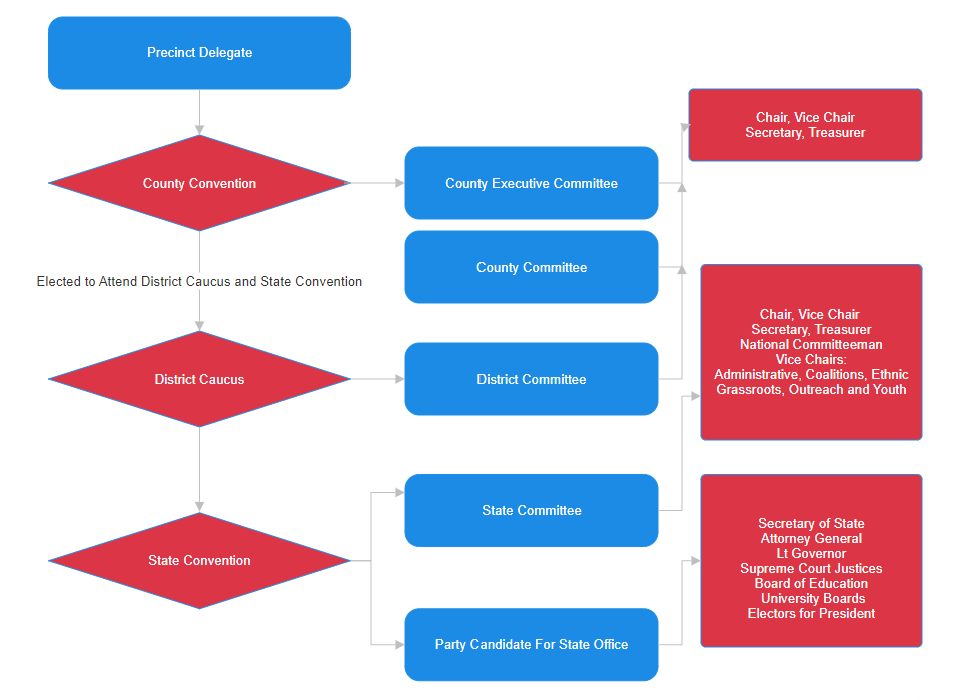
The Michigan Republican Party, also know as MIGOP, is lead by an elected leadership called the State Committee. Leadership is further divided into thirteen Congressional District Committees and eighty three County Executive Committees.

These 3 blocks build, from the bottom up, County, District, State Party, a political system which models our national system, which is a constitutional republic.

This flowchart diagrams the party process.

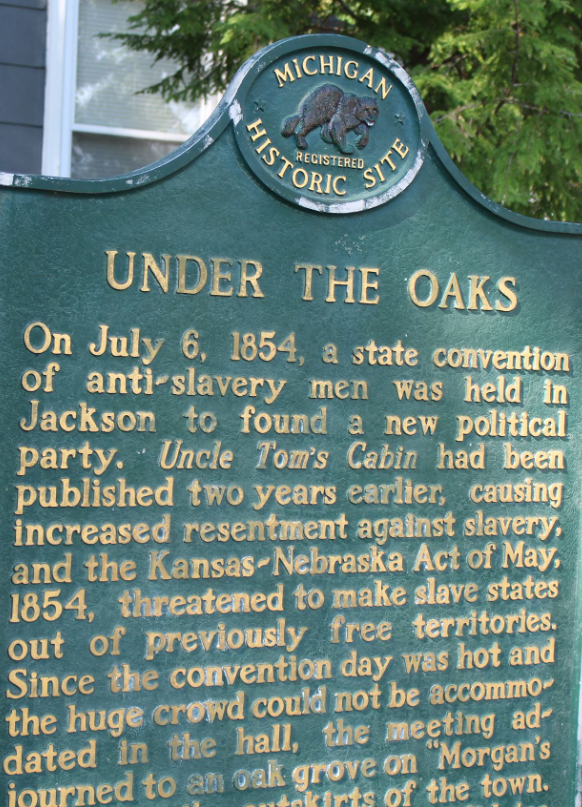
historicmarker

Governance

The Michigan Republican Party is governed by a set of BYLAWS that prescribe how the State Committee, District Committees, and County Committees work together. Each district and county also have their own set of independent governing bylaws.

"The advancement and diffusion of knowledge is the only guardian of true liberty."- James Madison

Republican Party History

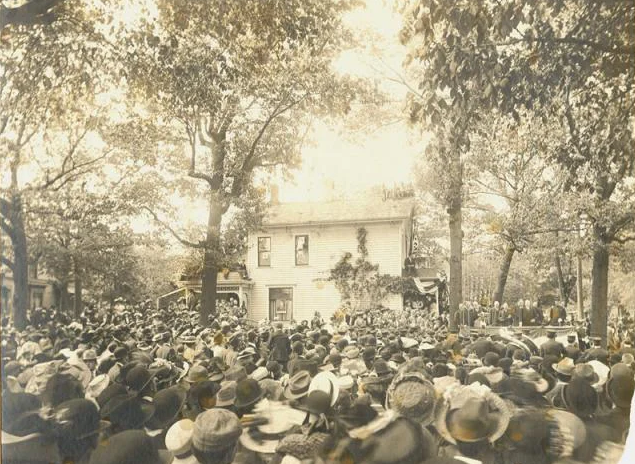
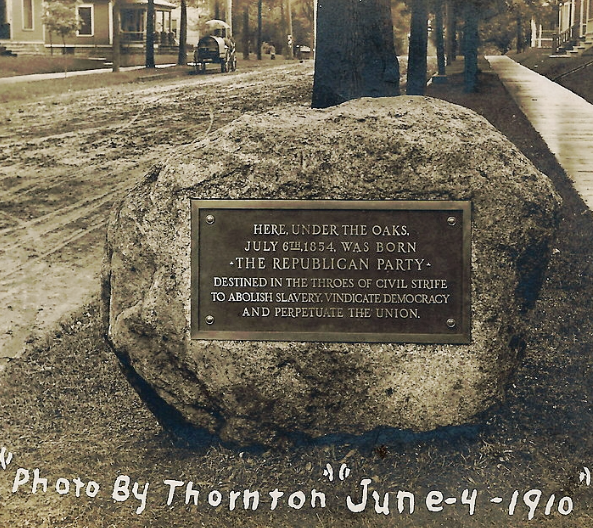
On July 6, 1854, over 1,000 people gathered in a Jackson hall to protest a recent expansion of slavery. The hall's cramped conditions and poor ventilation led them to move the meeting to a nearby park. It was here, under the shade of ancient oaks, that a group of party candidates was designated. That group of abolitionists were the beginning of the Republican party.

Historic Meeting Under the Oaks
Michigan, Republicans, Moral Leaders

The conversations held on that quiet street corner set the stage for the Civil War and the eventual abolition of slavery. Michigan Republicans stood at the forefront of the abolitionist movement, championing human dignity and freedom for all.

Historic Marker 1910
Legacy of Leadership

Early Republican leadership in the United States emerged in the mid-1800s with figures such as Abraham Lincoln, Salmon P. Chase, and Thaddeus Stevens. The Republican Party was founded on the idea of preventing the expansion of slavery into new territories and promoting free labor. These leaders believed that a nation built on opportunity, hard work, and equal access to land would strengthen democracy and reduce the power of the slave system.

Historic Marker
The Fight for Freedom

Republican leaders played a major role in expanding freedom by opposing slavery and pushing for legal reforms. They supported laws such as the Homestead Act, which gave free land to settlers, allowing more Americans to become independent farmers. Republicans also backed the Emancipation Proclamation and later the 13th Amendment, which permanently ended slavery in the United States.

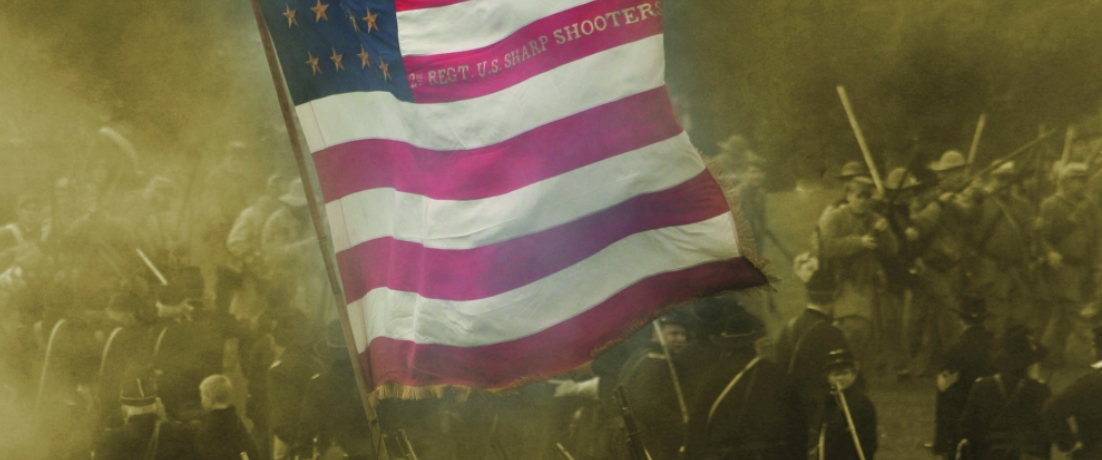
The Civil War

The Civil War (1861-1865) was fought largely over the issue of slavery and the future of the Union. Under Republican leadership, President Abraham Lincoln worked to preserve the nation while transforming the war into a fight for human freedom. The Union’s victory not only kept the country united but also led to the abolition of slavery, reshaping the United States politically, socially, and morally.

Civil War Leadership

"When annual elections end, there slavery begins."
-John Adams, Thoughts on Government, 1776